

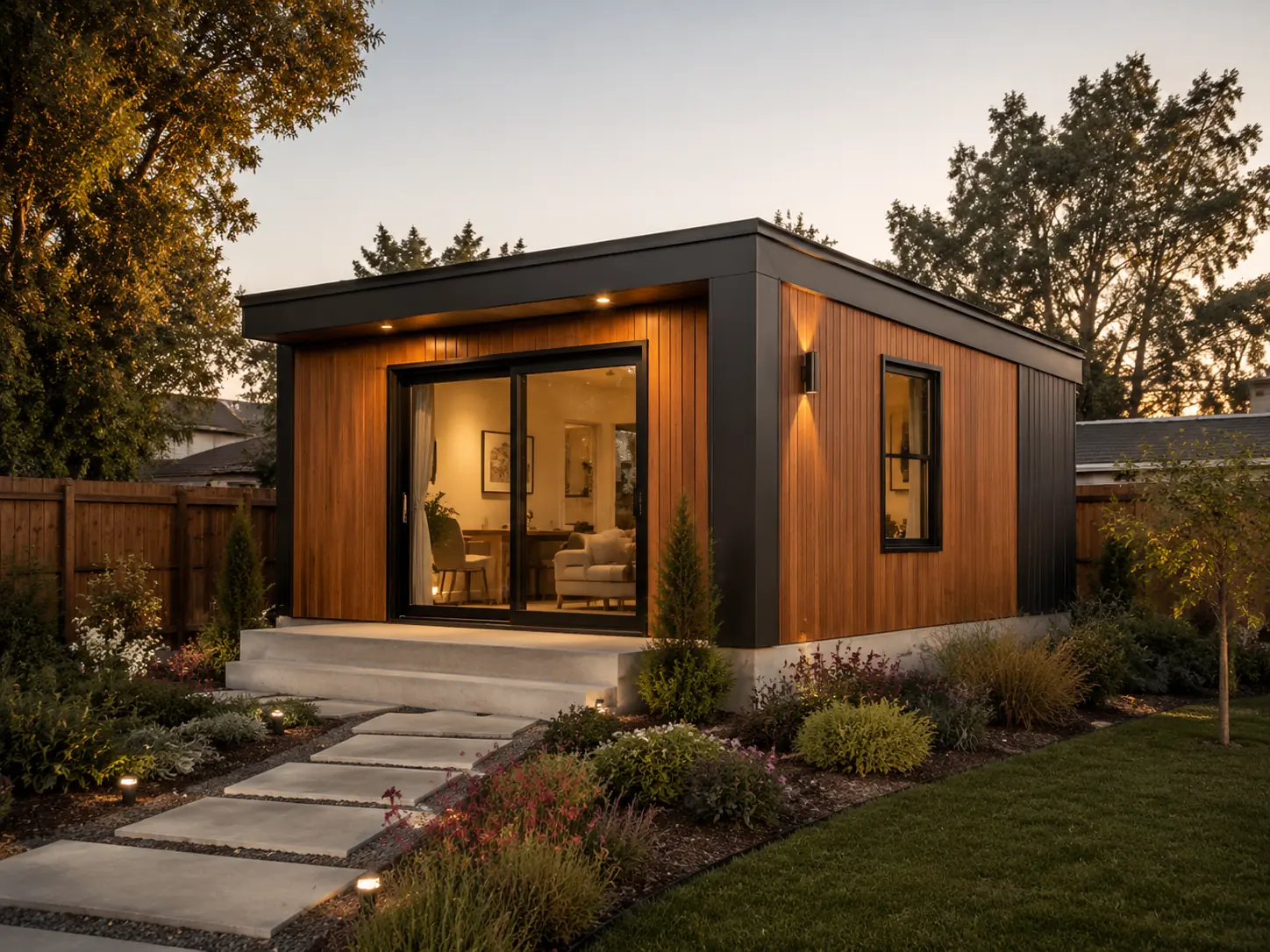
What counts as a prefab ADU?
A modular ADU may arrive as one or more substantially completed three-dimensional sections. A panelized system arrives as wall, floor, or roof components that are assembled on the property. A kit may provide a coordinated package of structural and enclosure materials, with more labor completed on site.
These approaches can reduce weather exposure and make repetitive factory processes more predictable. They do not remove the need for a compliant design, approvals, foundation, utility work, transport, installation, and inspections.
What a prefab quote may not include
Ask for a line-by-line scope. A factory price may exclude surveys, design adaptation, local engineering, permits, taxes, foundation, excavation, utility trenching, service upgrades, delivery, crane work, site restoration, decks, stairs, landscaping, and final connections.
The most useful number is the installed, permitted, ready-to-occupy total for your specific property. Keep factory, transportation, site, and owner costs separate so gaps are easy to identify.
Delivery and site feasibility
A modular unit needs a safe route from the factory to the property and enough space for trucks, lifting equipment, staging, and final placement. Narrow streets, overhead utilities, trees, slopes, neighboring buildings, and soft ground can affect the delivery plan.
Panelized systems may suit constrained access because smaller pieces can be moved to the building area. The tradeoff is that more assembly and weather-dependent work occurs on site.
Permits and local responsibility
Prefab does not mean pre-approved everywhere. The unit and its site work must satisfy the codes and planning rules enforced by the authority having jurisdiction. Ask whether the provider supplies permit drawings, local engineering, energy documentation, foundation design, and responses to plan-check comments.
Clarify which party holds the construction contract and coordinates inspections. Fragmented responsibility can create delays when the factory, site contractor, foundation team, utility providers, and installer use different assumptions.
Questions to ask a prefab ADU company
Request written answers before paying a large deposit or committing to a production slot.
- What is included in the base price, and what is specifically excluded?
- Is the design already accepted in this jurisdiction, or must it be adapted?
- Who provides foundation, utility, transport, crane, installation, and finish work?
- What happens if permitting or site investigation requires a design change?
- What warranties cover the unit, transport, installation, and site work?
- When do payments become non-refundable, and what secures the deposit?
COMMON QUESTIONS
Frequently asked questions
Short answers to the practical questions homeowners ask while comparing ADU options.
Is a prefab ADU the same as a manufactured home?+
Not always. Modular, panelized, kit, and manufactured construction can be governed by different standards and approval systems. Confirm the legal classification with the provider and local authority.
Can prefab construction shorten the schedule?+
Factory production can overlap with some site work and reduce weather exposure, but permitting, foundation, utilities, delivery coordination, and inspections still shape the complete timeline.
Can I customize a prefab ADU?+
Many providers offer plan, finish, or accessibility options. Extensive customization can reduce the cost and schedule advantages of a standardized system, so ask what changes are already engineered and priced.
PRIMARY SOURCES
Sources and further reading
Regulations and program rules can change. Review the latest official material and confirm requirements with the authority responsible for the property.
This guide provides general educational information and does not replace property-specific legal, financial, tax, design, engineering, or construction advice. The editorial team writes the guide; the research-review role checks cited primary sources and calculation consistency. Last updated September 8, 2026.