

Check the original sources and current program guidance before making a property-specific decision.
What is the difference between prefab and stick-built?
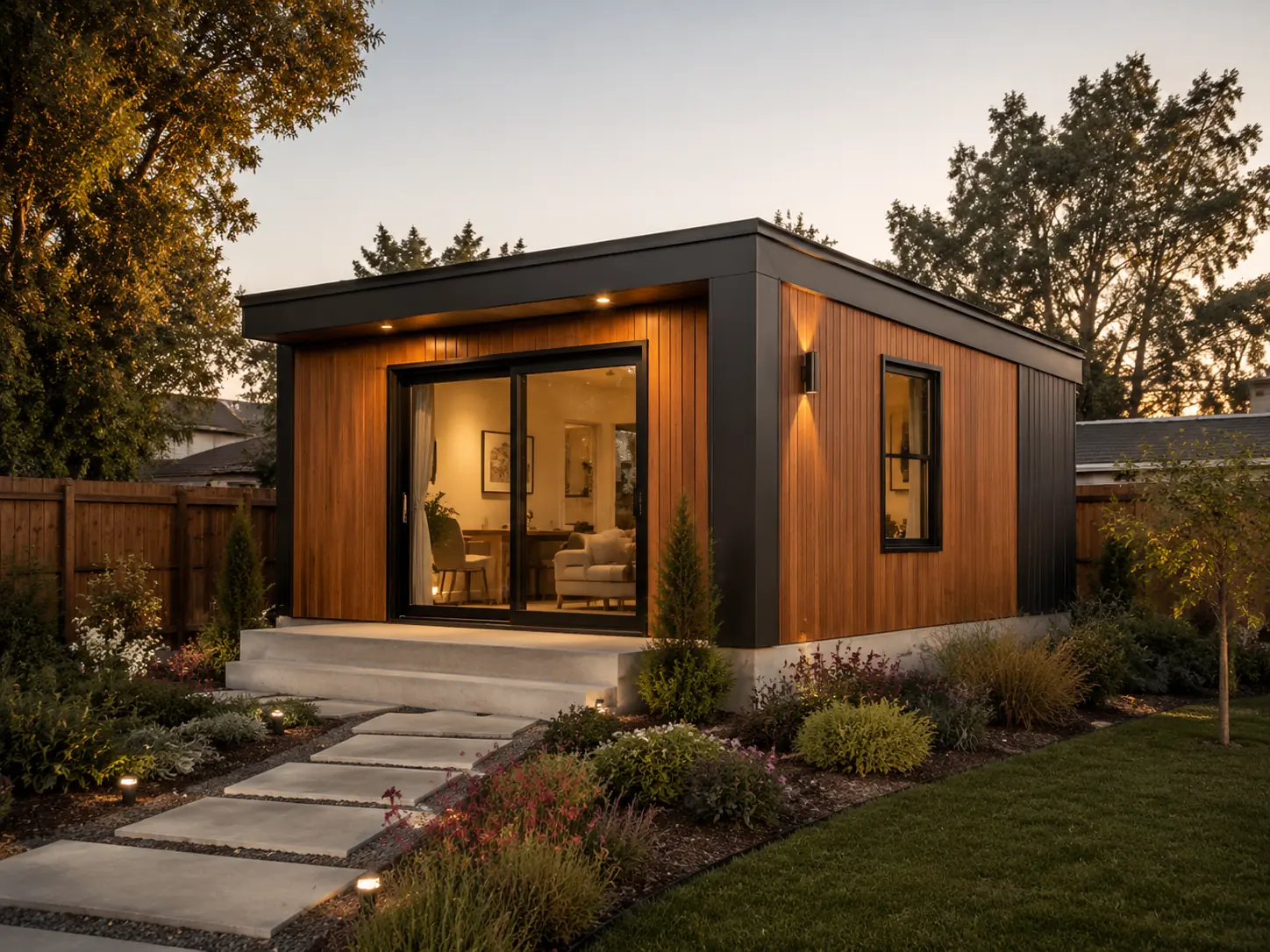
Prefab moves some or most building production off-site, while stick-built construction assembles the home primarily on the property.
Prefab can include three-dimensional modular units, panelized systems, kits, or factory-made components. Those formats have different transport, installation, inspection, and site-labor needs.
Stick-built does not mean improvised. A well-coordinated site-built project can use standardized details and off-site components, while a prefab project still requires extensive site work and local coordination.
| Factor | Prefab / modular | Stick-built |
|---|---|---|
| Production | Factory plus site work | Primarily on property |
| Customization | Best within engineered options | Usually more site-specific flexibility |
| Access risk | Transport, crane, and staging | Labor and materials must still reach site |
| Cost comparison | Use installed total | Use complete contract plus owner costs |
Is prefab cheaper or faster?
It can improve predictability or overlap factory and site work, but the result depends on design changes, factory scope, permitting, foundation, delivery, utilities, installation, and site completion.
An advertised module price may exclude surveys, permits, taxes, foundation, freight, crane work, utility connections, service upgrades, decks, stairs, landscaping, and local contractor costs. Compare a permitted, installed, ready-to-occupy total.
A factory schedule can also be affected by production queues and deposits, while a site-built schedule can be affected by weather, inspections, subcontractor sequencing, and material delivery.
What property checks matter most?
For prefab, verify the transport and lifting path; for both methods, verify the buildable area, foundation conditions, utility route, fire access, and agency approval path.
Narrow streets, overhead wires, trees, neighboring structures, steep grades, soft ground, and limited staging can make delivery difficult. Panelized construction may reach sites that cannot accept a complete module, but more assembly occurs outside the factory.
- Request a written factory, transport, installation, and site-work scope.
- Confirm who prepares and responds to local permit documents.
- Complete a route, crane, staging, and foundation feasibility review.
- Match payment milestones to completed, protected work.
- Review warranties across the factory-to-site handoffs.
Which method should you choose?
Choose the team and delivery structure that best resolves the property, design, budget, schedule, quality controls, and accountability—not the label with the strongest marketing.
Prefab can be compelling when the site accepts the system, the standard plan meets the program, and one party clearly coordinates every handoff. Site-built can be compelling when access is constrained or the design must respond closely to slope, trees, architecture, or an unusual footprint.
Ask both candidates for comparable scope, assumptions, exclusions, schedule, insurance, license information, warranty, and change-order terms.
COMMON QUESTIONS
Frequently asked questions
Direct answers to related questions, with important limits and verification steps kept visible.
Is prefab the same as manufactured housing?+
Not necessarily. Modular, panelized, kit, and manufactured construction may use different standards and approval paths. Confirm the exact classification.
Does prefab avoid local permits?+
No. The building and site work still need the approvals and inspections that apply in the jurisdiction.
Can a prefab ADU be customized?+
Often within predefined options. Extensive changes can require engineering, repricing, new approvals, and schedule adjustments.
OFFICIAL AND PRIMARY SOURCES
Sources and methodology
Rules and program guidance can change. Review the latest official material and confirm property-specific requirements with the responsible agency and qualified professionals.
This article provides general educational information and does not replace property-specific legal, financial, tax, design, engineering, appraisal, lending, or construction advice. ADU.app’s editorial team writes the article; the research-review role checks citations and calculation consistency. Last updated September 8, 2026. Confirm current requirements with official sources.